Highlights
- Discover the rich history of the Chiprovtsi Monastery
- Learn about the traditional art of kilimi weaving in Chiprovtsi
- Explore the monastery's church and chapel, built in the 18th century
- See the ossuary tower that preserves the remains of the Chiprovtsi Uprising
- Hear stories and prayers from the weavers as they work on their carpets
Description
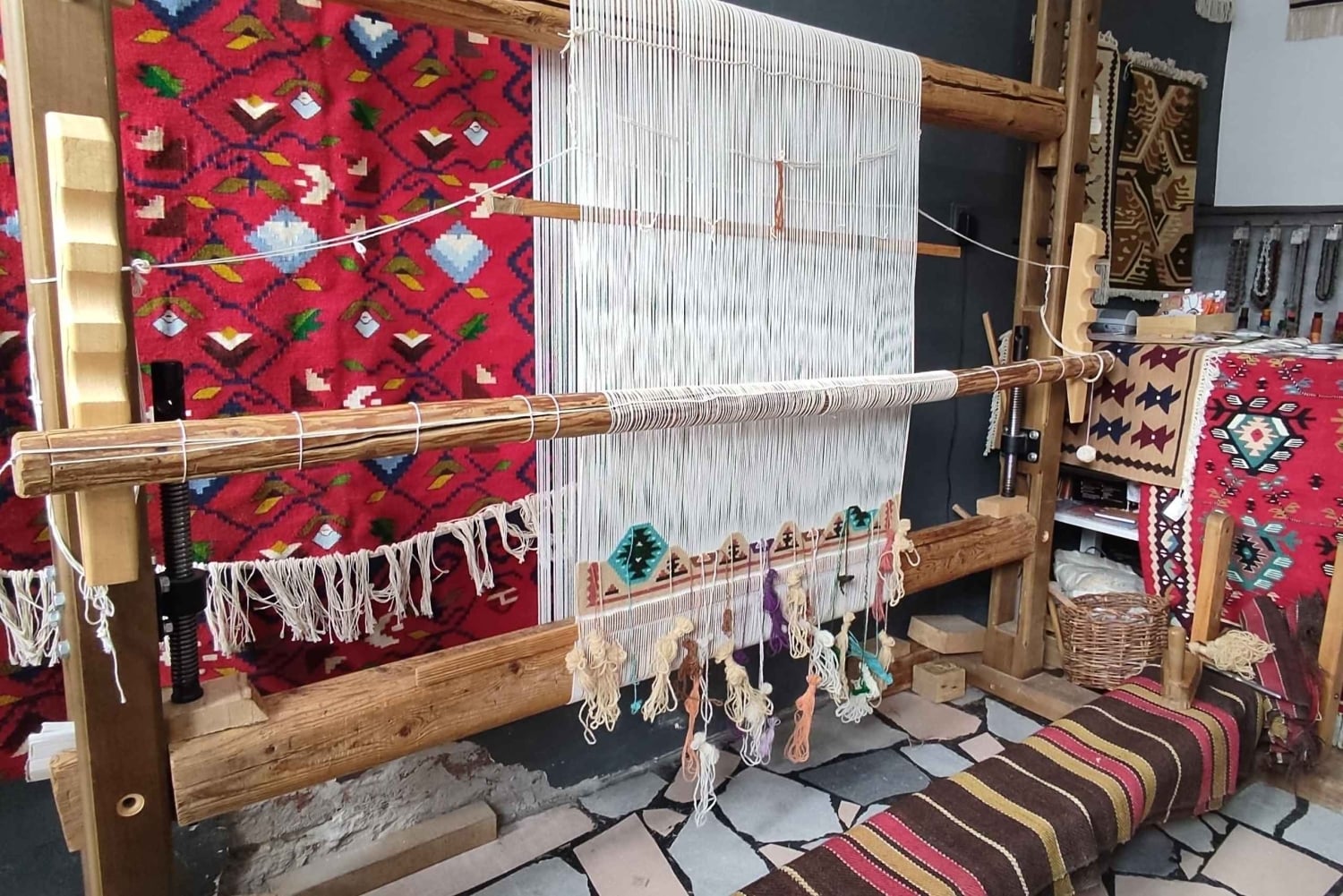
Begin your tour by learning about the tradition of carpet-making in Chiprovtsi. Discover how kilimi are hand-woven carpets made by the women of Chiprovtsi in North-Western Bulgaria. Almost every household in the town owns a vertical handloom, which the women use to make two-sided tapestries traditionally utilized as floor coverings.
Learn how the weaver takes several threads of the warp with her left hand, interlaces the weft yarn into the warp, and uses a small beater to tighten the weave. Hear how the men of the town typically engage in wool production, processing, and dyeing.
Find out how naturally dyed yarn gives soft pastel carpet hues, while chemical dyes produce brighter shades. The finished carpets are renowned for their composition, ornamental motifs, and color. Carpet weaving goes hand in hand with beliefs, verbal formulae, and ritual practices.
Hear how the weavers say prayers and make wishes for success before starting a new carpet, and sing and tell stories while working at the loom. The process of transmission occurs informally from mothers and grandmothers to daughters, often while working together on large carpets.
Carpet weaving is deeply integrated into the social and cultural life of the population. The best-known forms of ornamentation are reproduced throughout the community and even constitute the coat of arms of the town.
Next, visit the Chiprovtsi Monastery “Saint Ivan Rilski,” located 7 km from the city of Chiprovtsi. The monastery was declared a cultural landmark in Issue 22 of the State Decrees for 1975.
The monastery was founded during the 10th century, and during its existence encouraged literary and spiritual pursuits. The holy site participated in the country’s struggle against Ottoman rule that culminated in 1688 with the Chiprovtsi Uprising, when the monastery was used as a refuge for the insurgents.
The monastery has been destroyed more than once. The remains of those who died during the Chiprovtsi Uprising are preserved in an ossuary tower that is part of the monastery complex. The monastery church was built at the end of the 18th century and beginning of the 19th century. It has a single nave and apse.
The Saint Atanasiy Veliki Chapel, which was built in 1880, is located in one of the wings that house the monks. The Chiprovtsi Monastery is a functioning monastery. The annual celebration honoring the monastery church is held on October 19. At present the monastery does not offer overnight accommodations, since part of the complex is under repair. Informative materials and icons are on sale in the church, and the monks are prepared to provide information about the monastery’s history.
Includes
Transport to Chiprovtsi town
Guided tour of the local history museum
Attendance at the festival, workshops
Observation of carpet-making tradition
Visit to Chiprovtsi Monastery
Transport to Sofia
Easy cancellation
Cancel up to 24 hours in advance for a full refund